Agentic AI isn't a feature. It's an operating model.
Every major software vendor in 2026 is announcing an AI agent. Salesforce has one. Microsoft has one. Your project management tool just launched one.
So here is the uncomfortable question: if everyone has an AI agent, why are so few enterprises actually operating differently?
Because an AI agent embedded in a SaaS tool is a feature. An enterprise that has restructured how work gets done around autonomous, intelligent systems that is an operating model. The two are not the same thing, and confusing them is expensive.
What an AI agent actually does
A feature waits for you. An agent acts on your behalf. Gartner projects that 40% of enterprise applications will include task-specific AI agents by end of 2026 up from less than 5% today. But the same research warns against "agent washing" the growing tendency to label AI assistants as agents when they still depend entirely on human input to function.
A genuine agentic AI system monitors conditions, makes decisions, executes tasks, and reports outcomes without waiting for a prompt. It does not speed up your existing process. It replaces the waiting in your existing process.
That is a structural change, not a software update.
Where agentic AI creates real enterprise value
The McKinsey framework on agentic AI is clear: the highest-value deployments are vertical and function-specific, not horizontal. The enterprises capturing returns are deploying agents inside specific workflows not as company-wide assistants.
Concrete examples of where this works:
- Data pipeline management — agents that detect anomalies, reroute data flows, and trigger alerts before a human notices anything is wrong.
- Cloud cost governance — agents monitoring spend in real time, flagging waste, and initiating rightsizing actions automatically.
- Compliance monitoring — agents running continuous checks against regulatory requirements, generating audit trails without manual intervention.
- Application performance — agents tracking system health, escalating incidents, and in some cases resolving them autonomously.
In each case, the value is not in the AI being smarter than your team. It is in the AI being faster and always on which, for operational workflows, is often more valuable than intelligence.
Why most agentic AI deployments stall
The barrier is almost never the AI model. It is the data infrastructure underneath it.
Agents need clean, real-time, trusted data to act on. They need APIs that are reliable and well-documented. They need cloud infrastructure that scales with the agent's activity not against it. AWS, Azure, and platforms like Snowflake and Databricks are purpose-built for this kind of workload. But only if your pipelines were engineered with agentic consumption in mind.
Most were not. Most were engineered for dashboards.
The shift worth making
Adopting agentic AI as an operating model means asking a different question. Not "which of our tools has an AI agent?" but "which of our workflows should no longer require a human to initiate?"
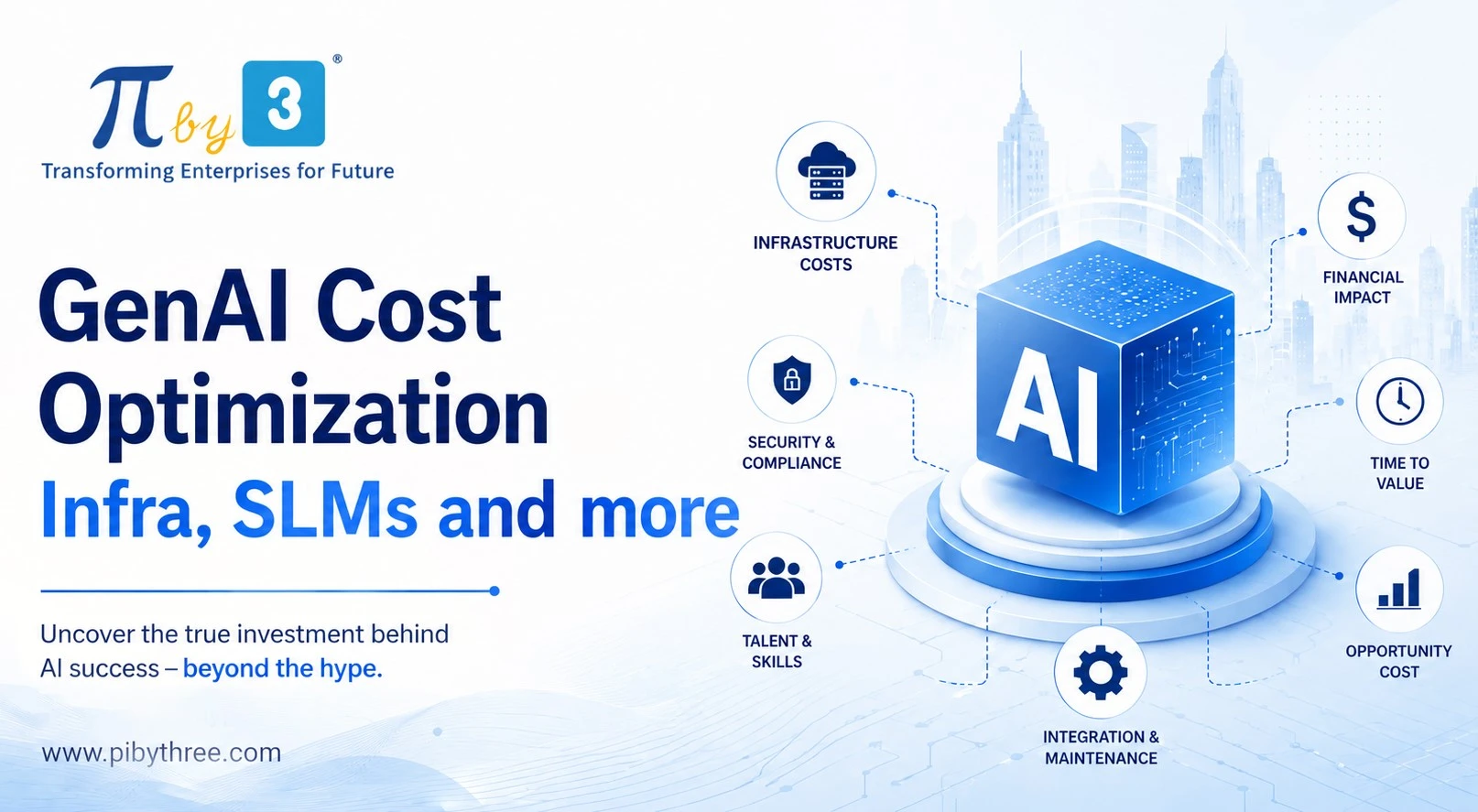
That question leads to a data architecture conversation. A cloud readiness conversation. A FinOps conversation about what it costs to run agents at scale.
At πBy3, we build the infrastructure that makes agentic AI operational not just demonstrable. Platform-neutral, outcome-focused, and built for enterprises that want results, not pilots.
Because agentic AI that stays in a pilot is just an expensive feature.
👉 Build the operating model — pibythree.com